
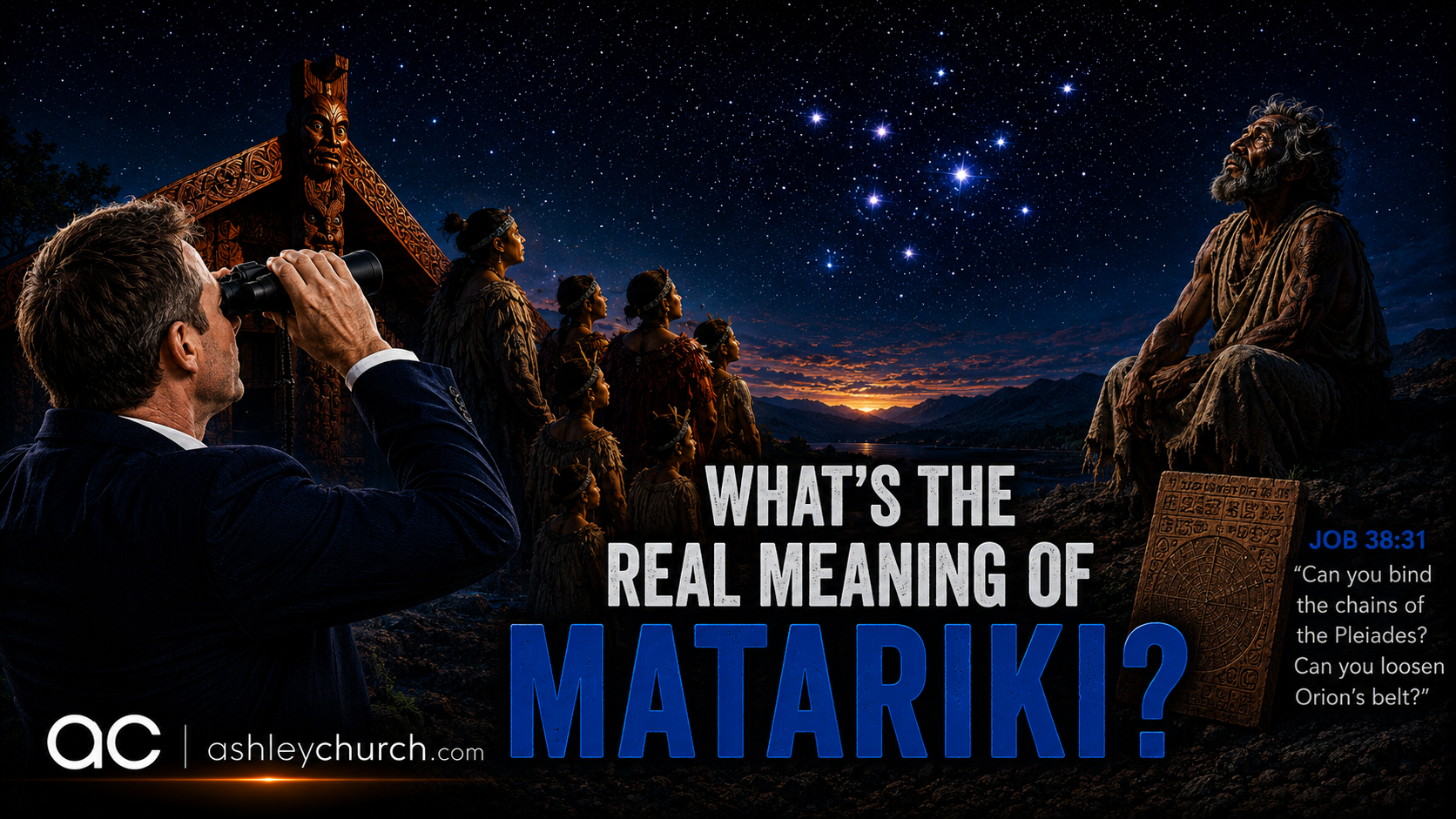
What is the real meaning of Matariki?
The real message hidden in the stars
Today marks the celebration of Matariki in New Zealand.
Astronomically, Matariki is the Māori name for the Pleiades, a compact cluster of distinctive, bright stars in the constellation Taurus, whose first pre-dawn rising in mid-winter helps mark the turning of the year.
Although the public holiday has only been with us since 2022, Matariki itself is anything but new. Māori mark it as the beginning of the New Year, a time to remember those who’ve passed away, and to look forward with hope to the year ahead. It’s a tradition built around remembrance, gratitude and new beginnings, and one that’s becoming an important part of New Zealand’s national story.
It also reminds us of something else that’s worth celebrating. The ancestors of Māori were among the greatest navigators the world has ever known. Long before maps, compasses or satellites, Polynesian sailors crossed immense stretches of open ocean guided by the winds, the currents, the sun, the moon and the stars. They found tiny islands scattered across the largest ocean on earth with a level of skill that still leaves modern navigators shaking their heads in admiration. Matariki was one of the heavenly signposts that helped them to understand the changing seasons and the passing of the year.
But the idea behind Matariki – the appearance of the Pleiades – isn’t unique to New Zealand. In fact, their appearance is recognised throughout the world and celebrated by many cultures. The ancient Greeks knew them as the Seven Sisters. In Japan they’re called Subaru. Hawaiians know them as Makaliʻi. In Samoa and Tonga they’re known as Mataliʻi. In India they appear in ancient tradition as Krittika. They were recognised by the Chinese, by Native American peoples, by Aboriginal Australians, by the ancient Egyptians and by countless other civilisations stretching back through antiquity, woven into stories, traditions and cultural identity.
For some of these people they became practical markers of the seasons. For others they were navigational aids.
However, some cultures went beyond simply observing these stars and began to worship them. Instead of seeing them as part of creation, they came to see them as divine. In ancient Babylon, the movements of the stars became central to religious belief and astrology. In Egypt, heavenly bodies became associated with divine beings and the journey of the soul. In parts of Greece and Rome, stars and planets became closely connected with gods and with human destiny. Across parts of the ancient Near East, the “host of heaven” wasn’t simply admired. It was revered.
Even here, in New Zealand, there’s concern amongst some in the Christian community, that Matariki is the enforced imposition of an alternative religious viewpoint. This is a fair question – Matariki carries spiritual meaning in Māori tradition – the question revolves around whether that constitutes reverence, or worship.
The latter would be unacceptable. The Bible consistently warns against worshipping the sun, the moon, the stars or anything else within creation. It never discourages us from admiring them – in fact, it encourages us to marvel at the heavens – but it forbids confusing the creation with the Creator.
And as I was thinking on this a few days ago it occurred to me that God actually uses these very stars – the ones we’re remembering today as Matariki – to make this point.
One of the oldest books in the Bible tells the story of a man called Job. His children had died, his wealth had vanished, his health had collapsed, and he cried out to God – desperate to know ‘why’ these things had happened to him.
When God finally answered, He didn’t begin by explaining Job’s suffering or why he’d lost everything. Instead, He reminded Job of who was really in control.
He took him on a journey through creation. He spoke about the foundations of the earth, the oceans, the dawn, the weather, the animals and the heavens themselves. Then, almost unexpectedly, He asked Job a question that cuts through time and challenges us in the 21st century.
“Can you bind the chains of the Pleiades? Can you loosen Orion’s belt?” (Job 38:31)
I find that remarkable. Of all of the countless stars in the heavens, one of the very few groups mentioned by name in Scripture is the very cluster that New Zealand celebrates today.
But God’s point wasn’t about the Pleiades. It was about Himself.
Job wanted to know who was in control of his life. God’s answer was, in effect, “Look at the heavens. Can you move those stars? Can you alter their course? Can you command them? Can you hold the universe together?”
Of course Job couldn’t.
Neither can we.
The stars are magnificent, but they have no power of their own. They don’t control our future. They don’t determine our destiny. They don’t answer our prayers or direct the course of history. They’re part of an ordered universe created by the One who placed them there and who faithfully keeps them in their appointed courses.
And that’s the lesson we’ve forgotten.
There’s nothing wrong with celebrating Matariki. There’s nothing wrong with admiring the extraordinary wisdom of the Polynesian navigators or respecting the traditions that have been handed down through generations. And there’s certainly nothing wrong with standing beneath a clear winter sky and marvelling at the beauty of the heavens.
But our eyes were never meant to stop there.
Matariki invites us to look up, beyond the stars, and see something even greater. They remind us that behind the order of the universe stands the One who created it, who sustains it, and who holds it all together.
And perhaps, for New Zealanders, that’s the real meaning of Matariki.
Not that we should worship the lights in the heavens, but that we should worship the God Who placed them there.
As the Psalmist wrote thousands of years ago, “The heavens declare the glory of God; the skies proclaim the work of his hands.” (Psalm 19:1)…
Interact with this article on Facebook by clicking here
Discover more from ashleychurch.com
Subscribe to get the latest posts sent to your email.
