
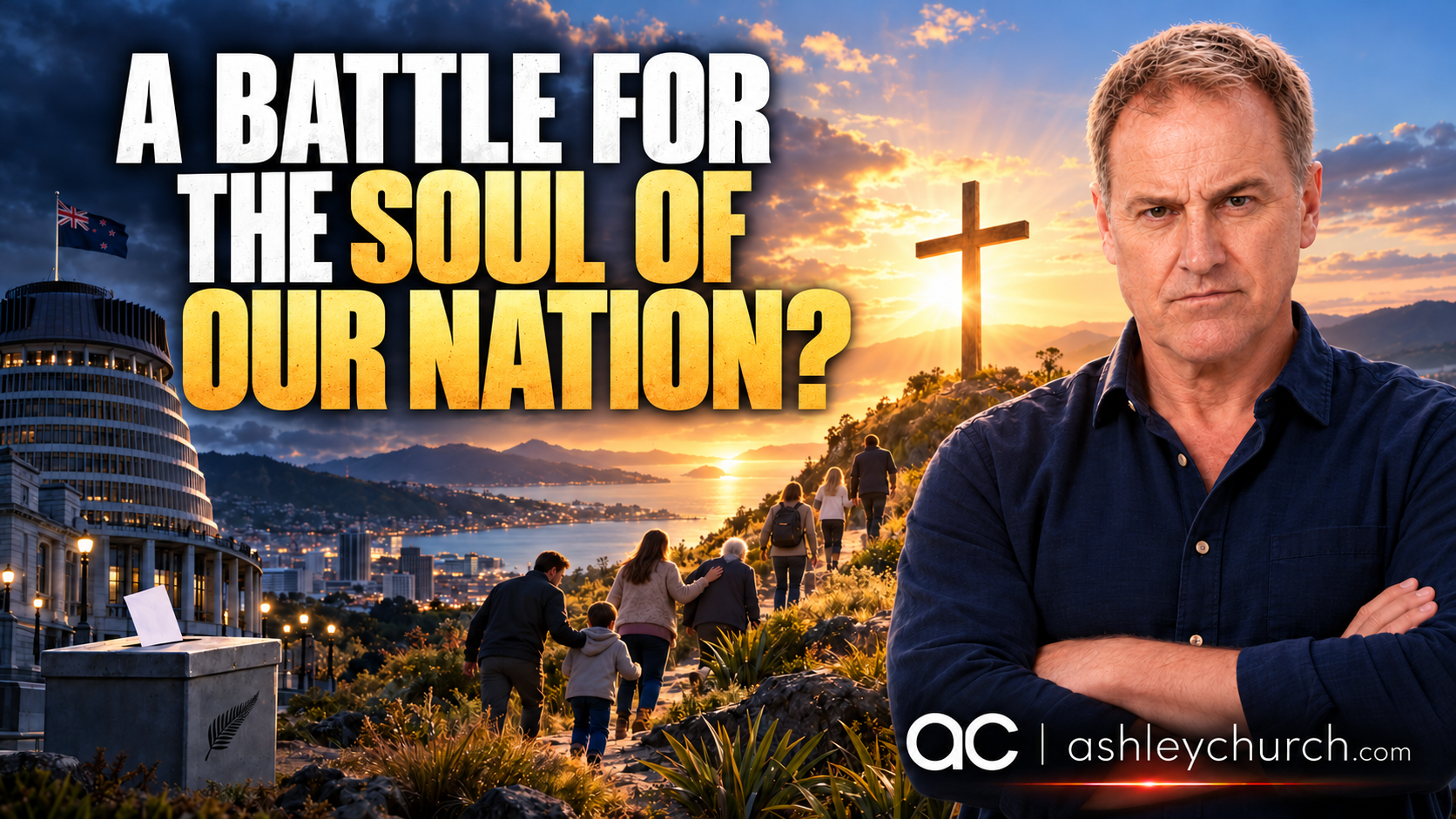
A battle for the soul of our nation?
Does change need to start on our own doorstep?
I write predominantly about two topics: politics and faith.
The political stuff captivates and animates me. The size of the national debt, the pressure on household budgets, the size of the public service, the direction of our country and the consequences of making the ‘wrong’ decision when we vote all deserve serious attention and are all topics about which I’ll write over the next few days as we approach election day.
But every so often, I need to remind myself to put those concerns into perspective and remember that issues that seemed overwhelmingly important five, ten, or twenty years ago barely figure in our national consciousness today. Things that consumed our attention and dominated our conversations now barely register because circumstances change and we move on to other things.
The same will be true of the issues that are driving the upcoming election. They may seem important now – but they’re ultimately a distraction from the far more important impact of the other topic that I write about: faith and our relationship with God.
That relationship carries consequences far beyond the political battles of the moment. God can restore a nation’s fortunes, renew its strength and put it back on its feet. An economy in trouble can recover, sometimes remarkably quickly – so our present circumstances don’t have to determine our future.
In my recent article about the British Empire, I noted that its extraordinary collapse was connected to Britain’s treatment of the Jewish people and its opposition to their restoration to Israel – and that wider principle works in both directions. Nations are accountable to God, and their choices can bring consequences or blessing. A nation willing to put its relationship with God right has grounds for hope far beyond its next Budget.
That’s why our spiritual condition concerns me much more than our economic position – and the problem isn’t new. The real issues confronting us at this election have been developing for generations and what we’re seeing now is the latest expression of the changes that have been taking shape for over seventy years. Since the end of the Second World War we’ve gradually changed our understanding of who we are, where our worth comes from and who has the authority to determine right and wrong.
Over the same period during which we’ve witnessed rapid advances in science, technology and healthcare, we’ve also presided over the destruction of the relationships, shared responsibilities and spiritual convictions that once held western societies together.
And that change is stark.
On one side is an understanding of life that begins with a Creator. We belong to Him. Our lives have a purpose that precedes our opinions, and our obligations to one another arise from something greater than whichever political movement happens to hold power.
The other side places humanity in the position of ultimate authority, with the expectation that we can devise the arrangements that will finally put the world right.
Both involve faith. Both carry beliefs about human nature, good and evil, and the source of our deliverance. Both have spiritual consequences, and both shape how we treat people.
Consider the society an all-knowing, all-loving God can establish. Every person has equal worth because every person is His creation. Each is known completely: their history, wounds, abilities, intentions, struggles and needs. Nothing is hidden, misunderstood or reduced to a convenient label.
His justice can take account of everything. His love reaches every individual. He can provide for people with an understanding of their circumstances that no government, institution or political ideology could ever possess. In such a society people are secure in their worth, love their lives, love one another and worship the God who knows and loves them perfectly.
By comparison, human efforts to build a just society face a profound limitation. They try to govern hearts that they cannot fully understand, using knowledge that’s always incomplete. Their ability to make good laws and govern wisely require a humility that few of us can sustain – and, ultimately, the pursuit of a better world becomes a demand that everyone submit to somebody else’s vision of what that should look like.
Under the promise of ‘inclusion’ those who disagree are excluded. Under the promise of ‘tolerance’ those who hold an unauthorised view are not tolerated. Such societies quickly move from disagreement to coercion as they decide that another person’s convictions make them undeserving of freedoms that they claim for ourselves. History gives us ample examples of this.
Most of us are drawn to visions of kindness, fairness and an end to suffering. Those desires are understandable. The question is whether the path we’re following can deliver them, and what happens to the people who stand in its way.
Of course, Governments can rule wisely. Political parties can have worthwhile ambitions to lift people out of poverty, improve public services, protect freedoms and create opportunities. Those things matter, and we should want our leaders to do them well.
But the deeper transformation of a society begins with change in the people who make it up. It begins with us. If we want a society marked by honesty, compassion, generosity and justice, those qualities need to take root in our own lives. We each have a part in shaping the character of our country through the way we live, the choices we make and the way we treat one another.
That brings us back to our relationship with God. Looking to Him involves much more than asking Him to fix the world around us. It means inviting Him to change us: to expose our selfishness, correct our attitudes, reshape our priorities and teach us to love as He loves.
It means being willing to pray, “Make me more like You”, and then allowing Him to work on the parts of our lives we might prefer to leave untouched.
Imagine what would happen if enough of us did that. More honesty in our dealings. More generosity towards those in need. More willingness to forgive, take responsibility and care for people whose circumstances differ from our own.
Those changes would reach into our homes, workplaces, communities and institutions. Over time, many of the problems we ask governments to solve would begin to diminish because the behaviour that creates or sustains them would be changing.
That invitation applies just as much to Christians as it does to those who have never known God. Those of us who profess faith can become so absorbed in political battles that we lose sight of our first responsibility to Him. We can spend a great deal of time demanding change in others while giving too little attention to the changes He wants to make in us.
For those who don’t yet know Him, the invitation is to discover the God who created you, knows you completely and loves you. For those who do, it’s a call to renew that relationship and allow Him to keep transforming us into His image.
As we approach the polling booth, we should take our choices seriously. We should also recognise how much of our nation’s future depends on choices we make every day, long after the votes have been counted.
Whoever forms the next government, the need for that personal transformation will remain. An election cannot do that work for us.
A nation returning to God begins with people returning to God. Each of us can make that choice today.
Comment on this article on Facebook
Comment on this article on LinkedIn
Discover more from ashleychurch.com
Subscribe to get the latest posts sent to your email.
