
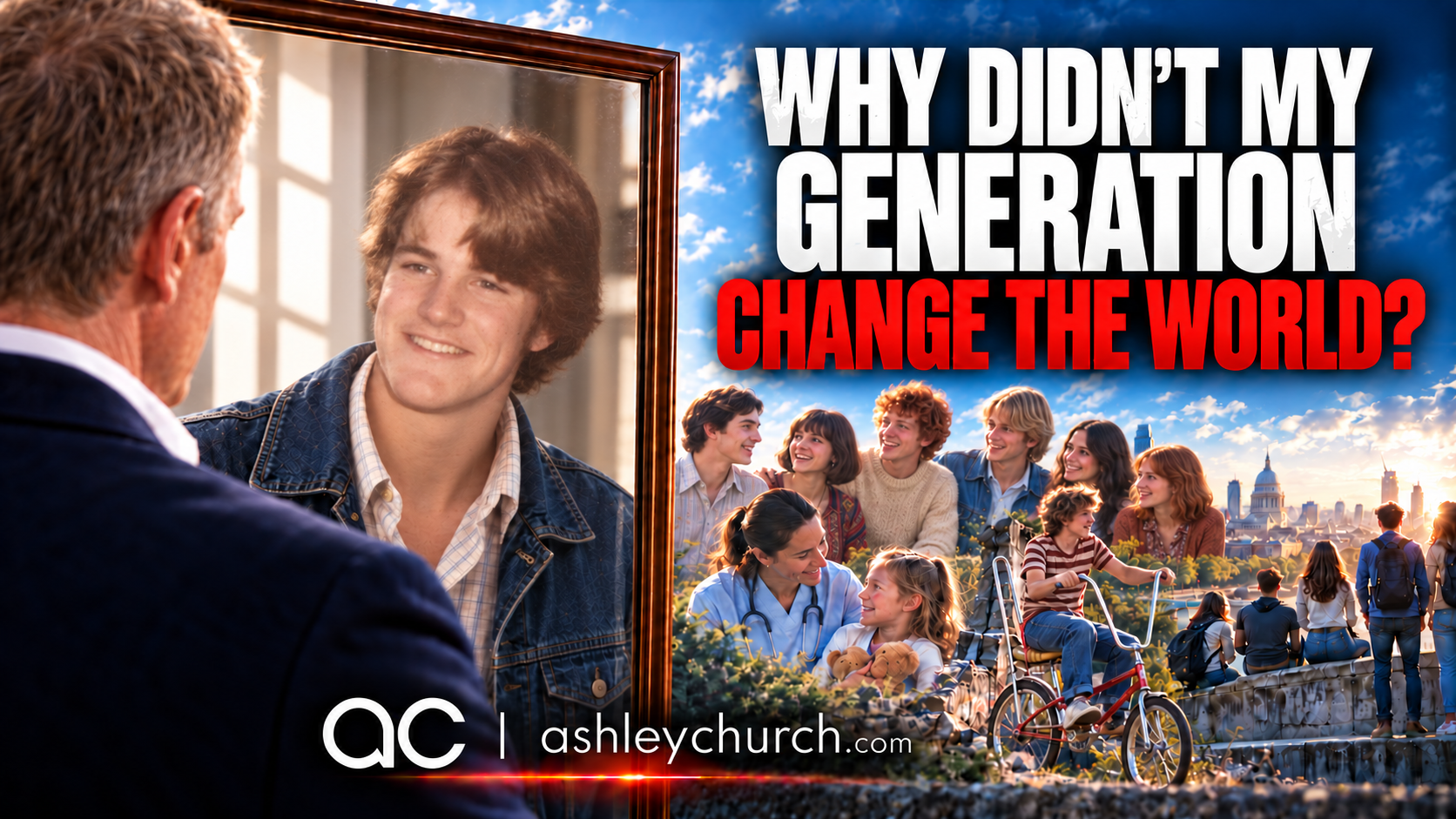
Why didn’t my generation change the world?
Some surprising facts about the Baby Boomers
Something significant is taking place around the western world. Women – particularly younger women – are increasingly leaning politically towards movements of the left, while young men are generally staying in the political centre.
This trend is strongly evident here in New Zealand and is encapsulated in a recent article (in which I feature) which suggests that the Greens’ rising support reflects their willingness to listen to younger New Zealanders struggling with housing costs, living expenses and limited economic opportunities. It argues that, however questionable the Greens’ economic policies, their opponents risk losing these voters by dismissing their frustrations and focusing on issues that feel less urgent to them. (https://tinyurl.com/2uka5k4h)
The latest 1News Verian poll, released at the end of September, confirms this by showing that the Greens have now reached 16 percent, their highest-ever result in that poll – with women aged between 18 to 49 disproportionately represented on 25.5%. Among young men in the same demographic Green support was just 8.5 percent.
This raises an obvious question. Why?
To be honest – I don’t think the answer to that question is particularly hard to figure out. Young women, are attracted to ideas which focus on fairness, equality, compassion and helping those who are struggling – and if you’re concerned about poverty, discrimination, the environment or people who appear to have been left behind, then a political movement which tells you that these things can be easily fixed has an obvious appeal.
The instincts behind those ideas are decent and admirable and even today’s young men will generally buy into them in some form. Indeed, most young people want a fair society in which children don’t go hungry, people have opportunity, and those who genuinely need help are able to access it.
But here’s the thing – my generation wanted those things too.
The young men and women I grew up with in the 1970s and 1980s were every bit as determined as today’s younger generation to make the world a fairer, safer and better place. We looked at war and wondered why supposedly intelligent leaders kept sending people off to kill each other. We saw famine and starvation and couldn’t understand why these things existed. We looked at racism, authoritarian governments and poverty and genuinely believed that our generation could do better.
And when I say ‘we’ – I mean all of us – men and women. There’s a contemporary caricature which portrays the world that young people are inheriting as though it was constructed entirely by (usually white) men – but that’s a gross misrepresentation of history. Even in the 70s and 80s the women’s movement was changing the world and while there were debates around opportunity, work, family roles, pay and power – those debates were just as often between women and other women as they were between women and men.
Women weren’t passive passengers. They entered universities, professions, politics and business in growing numbers. Some marched and campaigned, some rejected the movements doing the marching, and many agreed with some parts of the argument while rejecting others and got on with building careers, businesses and families.
So women back then weren’t one political organism any more than they are now – and the important point is that men and women were both part of a generation which believed it could make the world better.
We even had music that described that aspiration – captured poignantly in songs like Land of Confusion released by Genesis in 1986. If you haven’t watched the video for a while, have another look. It’s gloriously 1980s, with the grotesque Spitting Image puppets portraying Ronald Reagan, Mikhail Gorbachev, Margaret Thatcher and the political personalities of the time against the backdrop of the Cold War and nuclear anxiety.
But while the video looks dated, the sentiment isn’t. Change the faces and the hairstyles, replace the world leaders of 1986 with those occupying the international stage today and improve the production values, and you could make much the same video. There are still wars, governments still make decisions affecting millions of people, and ordinary people still wonder why those supposedly in charge can’t behave more sensibly. Another generation looks at that world and thinks, surely we can do better.
But that’s exactly what we thought too – which begs the question – if we knew the world needed changing – why didn’t we change it?
The answer is simple. We did.
According to the World Bank, between 1990 and 2022 around 1.5 billion people were lifted out of extreme poverty. Over the same period, child mortality collapsed, with the global under-five mortality rate falling by around 60 percent between 1990 and 2024.
Medical care and life expectancy also improved across much of the world, women’s economic and professional opportunities expanded enormously, and entire populations gained freedoms that had previously been denied to them. Apartheid ended in South Africa, communist governments collapsed across Eastern Europe, and technology transformed access to communication, information and knowledge.
Much of this is the work of my generation – the same generation that was determined to make things ‘better’ – so the idea that the past forty or fifty years have simply been one long story of failure isn’t remotely true.
That doesn’t mean we got everything right, of course. The world today’s young adults have inherited is still deeply troubled, but it is significantly more heathy, wealthy and free than the world we inherited.
Which raises another interesting question.
How did a generation that was so determined to reduce poverty, improve people’s lives and build a fairer society become associated with capitalism, markets, lower taxation and many of the things that parts of the modern left now regard with such suspicion?
The answer to that lies in another of the great changes that occurred during our lifetime: we recognised the failure of the post-war generation.
Just like us, our parents had wanted to build a better world after the devastation of World War 2. They had attempted to create a cradle-to-the-grave welfare society in which the State provided for everyone, everything from milk to electricity was subsidised, and where this largesse was paid for by very high taxes. But by the 1970s and early 1980s it had become increasingly obvious that this post-war economic experiment had failed. Britain was struggling with inflation, industrial unrest, weak economic performance and severe fiscal pressures. Many other countries had their own versions of this problem. Here in New Zealand we were collapsing under the yoke of extensive regulation, price and wage controls, high tax rates, growing public debt and, eventually, the 1984 currency crisis.
That experience helped produce a profound change in economic thinking across much of the Western world. The lesson wasn’t that we should stop caring about poverty or abandon the welfare state – in fact, it was almost the opposite. We slowly recognised that if we wanted better hospitals and schools, decent pensions and a society able to support people in genuine need, we needed to build economies which were strong enough to pay for them.
And that required wealth creation.
It meant allowing people to keep enough of the rewards of their work and creativity to make risk-taking worthwhile. It meant reducing unnecessary costs and regulation, encouraging investment and enterprise, and recognising that taxation doesn’t occur in a vacuum. It recognised that punitive tax rates cause people to alter their behaviour. Investment shifts, risks aren’t taken and economic activity which might otherwise have happened simply take place.
New Zealand’s experience over that time is particularly interesting. The reforms that began in 1984 broadened the tax base while dramatically lowering marginal income-tax rates. The top personal rate fell from 66 percent to 33 percent, yet aggregate tax revenue increased despite the lower rates.
So we had finally learned a fundamental lesson: a thriving economy can generate more tax while placing a lower burden on each additional dollar earned. More successful businesses mean more employment, more incomes, more investment and, ultimately, more revenue available to government. That was the irony. If we wanted the state to have the resources to do more of the things we thought were important, we needed an economy capable of producing those resources in the first place.
We hadn’t stopped caring- we’d just learned where the money came from.
That’s an important part of the history because – to someone born decades later who sees the system we ended up with without understanding how we got here – it could look like a once idealistic generation simply changed sides or abandoned its principles. Nothing could be further from the truth.
For all of that, the most important thing we learned wasn’t economic. Indeed, I think the biggest mistake my generation made was remarkably similar to one every generation seems tempted to make.
We thought the problem was with someone else. We blamed political leaders and governments. We blamed economic systems, corporations and the establishment. We blamed people who held different views from us and, inevitably, we blamed the generation which had gone before us.
Our enemies had different names, but the instinct was exactly the same. If only we could change them, remove them, defeat them or change the systems they had built, we could finally build the world we wanted.
And sometimes we were right. Bad laws should be changed. Bad governments should be replaced. Institutions can be improved and injustice should be challenged. Much of the progress I’ve already described happened because people did exactly those things.
But eventually we ran into a much harder truth.
We could change laws, institutions and economic systems, but we couldn’t change human nature. War didn’t disappear because the impulse towards hatred didn’t disappear. Greed survived every economic system we devised, as did envy, resentment, selfishness and pride, because none of those things was created by a particular government or economic model.
They’re part of us.
The great mistake is to believe that we’re uniquely blessed with wisdom and that the world can be perfected if only we elect the right politicians, adopt the right economic system, defeat the right enemies or force everybody else to behave in the way we think they should.
Christianity teaches something much more challenging. Before we look outward, we’re instructed to look inward. The first person I have responsibility for changing is me. Lasting change in society happens from the inside out. Better people build better families, better communities and better institutions.
And, ultimately, that transformation comes from God.
That’s the limitation my generation didn’t fully understand when we were young and confidently announcing that we were going to change the world. We thought mankind could fix mankind. We thought that if we just found the right political formula, the right leaders or the right economic structure, most of the problems would eventually disappear.
They didn’t, because the deepest source of those problems was never solely political or economic. It was human.
Which brings me back to where this article started.
I understand the desire for fairness. I understand wanting people to be treated better and wanting society to become kinder, safer and more just. Those aren’t foolish ambitions, and they’re certainly not new ones.
My generation wanted many of the same things. We tried to change them and, in some important ways, we succeeded. Along the way we discovered that some of our assumptions about how the world worked were wrong, and we adjusted accordingly.
But perhaps the most important lesson was the one we took longest to learn. It’s easy to shake ones fist at the world and vow to do things better than those who went before us – but the most important changes won’t occur until we change ourselves first – and that’s as true of us all today as it was 50 years ago….
Comment on this article on Facebook
Comment on this article on LinkedIn
Discover more from ashleychurch.com
Subscribe to get the latest posts sent to your email.
